
Video transcriptWhy Test a Home or Business for Mold?
Why do I need to have my home or business tested? Hi, I am Mark from Mold and Air Duct Pros, based in Cleveland, Ohio. A common question we get is, why do I need to have my home or business tested for mold? We know mold is naturally occurring. It is safe to say that all buildings shelter mold spores in one way, shape, or form. What will a test tell me if I know spores exist in my building to begin with? Mold spores thrive and have the potential to spread when conditions are right.
Moisture, improper ventilation, or a mold-containing source that causes cross-contamination can all cause mold growth. For our testing, we use the InstaScope. We call it a lab on wheels. It can test numerous rooms and spaces in one session and provide instant results. This testing accomplishes two things. First, it can expose elevated mold levels that need to be addressed for the safety of your home and its occupants. Second, it can show that your home has safe mold levels and give you the peace of mind you are looking for.
If you need help testing your home or business for mold, call Mold and Air Duct Pros at (440) 467-4104.
Mold testing is useful when it answers a specific question about a building. It may help investigate a musty room, compare airborne conditions across a home, or document a remediation result. It cannot diagnose a health condition or guarantee that every hidden surface is clear.
For Cleveland homeowners, the first step is to understand the concern. Visible growth, a recurring leak, a home-sale deadline, and an unexplained odor may each call for a different inspection plan.
Do You Always Need a Mold Test?
No. The EPA explains that sampling is usually unnecessary when visible mold is present. The growth and moisture still need attention, even without a species name or an airborne count.
An inspection can help determine the affected materials and extent. Testing may add useful information when a finding is uncertain, conditions differ between rooms, or documentation is needed for a defined purpose. Before paying, ask: “What question will this test answer, and how will the result change the plan?”
Our mold inspection and testing service begins with a free visual consult to discuss whether a more detailed inspection fits your concern. Our inspection cost guide explains the paid service and published pricing.

Signs That Deserve a Closer Look
- Visible growth or recurring staining: Document where it appears and whether it returns after cleaning.
- A musty smell: Note when it is strongest and whether it changes with the HVAC system or weather.
- Water history: Tell the inspector about leaks, flooding, condensation, and previous repairs.
- Damaged materials: Peeling paint or warped surfaces may point to moisture, but neither proves mold by itself.
Symptoms can have many causes. Discuss them with a healthcare professional, especially if they persist or worsen. Our mold and health article explains the distinction between a building assessment and a medical evaluation.
What Different Inspection Methods Can Tell You
Visual Inspection and Moisture Investigation
An inspector examines accessible areas, reviews the water history, and checks suspect materials. Moisture meters help evaluate dampness. Thermal imaging shows temperature patterns that may warrant investigation; it does not see through walls or identify mold by itself.
Hidden spaces may require further access or investigation. The report should identify what was inspected and any limitations.
Air Sampling and On-Site Airborne Measurements
Laboratory air sampling collects a sample for analysis. Depending on the method, the report may describe mold groups and concentrations in that sample. On-site instruments provide a different kind of measurement during the visit. Ask what the chosen method measures, what it cannot identify, and how the results will be interpreted.
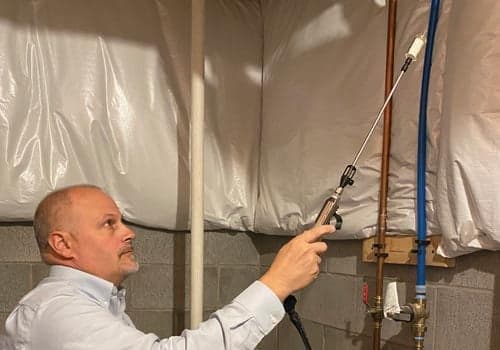
We use InstaScope to compare room-by-room airborne readings with an outdoor baseline and provide a same-day report. Those readings are evaluated alongside the moisture and visual findings. Laboratory analysis may still be appropriate when a question requires information outside the on-site method's scope.
Surface and Material Samples
Targeted samples can help investigate a suspicious surface. The method matters: an on-site screening test and a laboratory analysis do not provide identical information. Ask whether the test is screening for growth, identifying mold groups, or answering another question.
A result from one location does not establish the condition of every wall or room.

What Mold Testing Cannot Prove
There is no federal airborne mold limit for a building to pass. The EPA's testing guidance also explains why a sample cannot be used to certify compliance with such a standard.
An outdoor comparison gives context; it is not a personal health threshold. A single low reading does not rule out hidden growth, and an elevated reading does not identify its exact source without further investigation. Testing also does not replace correcting a known moisture problem.
If your main concern is occupancy, read whether you can stay in a house with mold and discuss personal health concerns with a clinician.
Testing Before and After Remediation
Before work, inspection findings help define the scope: which areas need attention, what materials may need removal, and how the work area will be controlled. See what to expect during remediation for the practical sequence.
After work, the evaluation should check the completed area against the agreed criteria and document the findings. Our remediation service guarantee explains how we address covered work that does not pass our evaluation.
For a property transaction, coordinate the documentation and timing with your real estate professional. Our guide to mold during Cleveland home transactions covers those questions separately.
Questions to Ask Before Booking
- What concern is the inspection intended to investigate?
- Which rooms and accessible spaces are included?
- What does each test measure, and does anything go to a laboratory?
- Will the report explain limitations as well as findings?
- What is included in the price, and what could require additional work?
- How will you explain the next step if no remediation is recommended?
Request a free visual consult to discuss the concern and whether a whole-home inspection is the right next step.