Video transcriptHow Much Does Mold Remediation Really Cost?
Mark, so you completed a mold inspection, and let's say you found some elevated mold levels and some visual mold. Yeah. So now the customer naturally is going to ask, how much is it going to cost for me to remove this mold? So how much does mold remediation and removal cost with our company? Yeah. So first, let's go over what goes into it. The first thing we want to do — let's pretend this is the area that we're treating, or we're looking at this 300 square foot basement. Okay, like 15 by 20 feet. My beautiful drawing here.
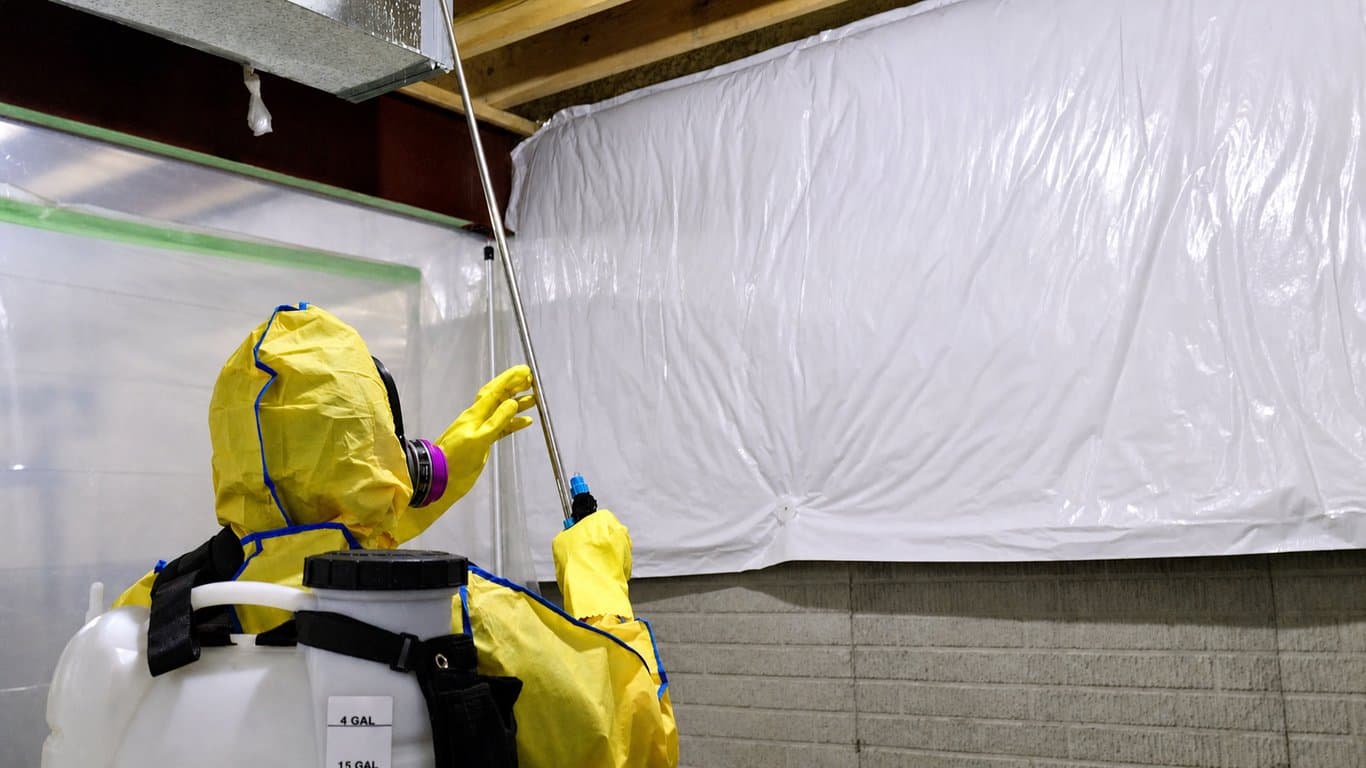
So the first order of operation is the prep work. Again, we're here to honor the homeowner's place, right? So the first thing we're going to do is set up floor covering. One thing you're going to notice: none of our guys will ever step foot in that house without shoe covers and floor covering. The second order of operation is, again, some more prep work. So the next step is going to be containment. The purpose of containment — I mean, keep in mind, what we're going to be doing in that house is going to be very invasive. There's a lot that goes into it.
We want to basically protect the occupants in that house. So there's going to be zipper doors, there's going to be tension poles. Basically, it's going to be like a little crime scene in the house. Really, depending on — referencing back to our basement here — you know, what we use to determine how much the cost is going to be is what's called a mold severity index. Depending on the material, sometimes it needs to be removed. There really is no saving it if it's porous. Exactly: your drywall, your insulation.
Once that's removed, that is bagged and then goosenecked inside that containment. Now, once they're exiting that premises, you will never see our guys walking around with drywall or wood. Everything they're going to come out with is going to be bagged and pretty much goosenecked, and they take that out, because the whole idea is we don't want to contaminate other spots that don't have mold. Exactly. Now, again, referencing back to our mold severity index, there's sometimes material that can be treated.
So for instance, your bottom plates, the framing of the basement — sometimes when that's impacted we can treat it using a patented method called the React Extract. Basically, we just apply a chemical. It creates an excess of surfactants, almost like a lifting agent, and gets the mold staining out, and those roots out, those small little fibers that go in, and then we actually vacuum it off.
Now, a couple other things that are happening inside that containment chamber, or that area that we're working in: there's always going to be some kind of negative air or some kind of filtration to basically help make sure the HEPA filters, right? You're also going to see one of those HEPA filters ducted out an actual window, because again, we're disturbing things. Whatever those HEPA filters don't catch, we want to ensure that it's basically ducted outside. Once that is complete, we are then going to HEPA vacuum every square inch of that basement.
This is just to ensure that the next steps that we're going to do are going to help us pass what's called the post-remediation evaluation. So in every project that we handle, we are going to be treating the air ducts. That's just going to be part of the job. It just helps us ensure that when we leave that house, we've done everything that we could to make sure, A, the air is healthy, but B, it's visibly clean and ready for use. So with a mold remediation job, they're also going to get a full-house duct cleaning job. Correct. Got it. Yep.
Now once that is complete, between 24 to 48 hours, I'm going to return to that place, like I mentioned, to do the post-remediation evaluation. So kind of how the homeowner started is how they're going to finish and start out with us. Yep. And also, I know we offer, if a homeowner chooses to use a third-party person, they could do a post-remediation verification with a third-party person to confirm that the mold remediation was done the right way. Yes. That's the beginning to end. Now, one question we have homeowners ask me.
They say, Mark, what if you come here and I don't pass that test? Do I have to pay for it? And my answer is absolutely not. Okay, so we guarantee the work. Yep. And so what is the cost for somebody? Let's say this is a 15 by 20 room in the basement, different mold severity index in the entire room. Approximately — I know each job is different, but on average, how much is it per square foot? So, between 13 and 16 dollars per square foot.
So in our instance here, in this 15 by 20, you know, 300 square foot basement, I mean, we can be looking at anywhere from thirty-six hundred dollars up to forty-eight hundred dollars. Just a range, again: if there's a lot of content we have to move around, couches, belongings, that may factor into the budget. Generally speaking, I'm pretty confident getting somebody a number like that.
So mold remediation, duct cleaning, post-remediation evaluation or verification, all that, approximately 13 to 16 dollars per square foot — in this example, 3,600 to 4,800 dollars for all that work. Thank you. Thank you.
Molds produce spores small enough to become airborne. Indoor mold exposure can affect people differently, and the exact health effects depend on the person and the conditions. Here is what to expect when professional remediation is needed in your home.
The Mold Remediation Plan
This is what to expect with a proper mold remediation plan. Following the steps below is crucial for a complete and successful mold remediation. Each stage also carries its own labor and materials, which is why remediation is priced by scope rather than a flat rate.
- Moisture control is the critical factor.
- Materials that can’t be dried and completely cleaned of any mold should be removed and discarded.
- Non-porous materials may be fully dried, cleaned and reused (metal, glass, plastic, stone countertops, etc.). These surfaces may be cleaned with bleach.
- Semi-porous materials may be cleaned as long as they remain structurally sound (concrete, wood).
- Porous materials can be penetrated by mold making them difficult to fully clean. As a general rule, it is best to remove and replace contaminated materials like drywall, carpet, and insulation.
The material and extent determine the cleanup method. Bleach alone does not resolve growth within damaged materials. See our article on cleaning with bleach to avoid this common pitfall.
What to Expect for Small Areas of Remediation
- For a small area, protection and containment depend on the material, location, and work involved. The size alone does not determine whether disturbing the material is appropriate.
- Work areas should be unoccupied except for trained technicians.
- HEPA vacuuming and HEPA filtration should be used.

The EPA's residential mold guidance explains when a small homeowner cleanup may be reasonable and when to seek additional help.
What to Expect for Large Areas of Remediation
- Any affected area greater than 10 square feet.
- Work area and adjacent areas should be unoccupied except for trained technicians.
- The work area should be placed under containment.
- Ventilation ducts in the work area and in areas adjacent to it should be sealed off.
- HEPA filtration should be used.

What to Expect for Initial Steps and Preparation
- Assessment and Inspection: The process begins with a thorough inspection by a certified mold inspector to identify mold presence and affected areas. This step is critical for developing an effective remediation plan.
- Home Preparation: Before remediation starts, addressing any moisture issues is essential to prevent mold from returning. Ensuring there’s a clear path to the affected area facilitates the remediation team’s work, involving significant equipment.
Containment and Removal
- Isolating Contaminated Areas: To prevent the spread of mold spores, the affected area will be sealed off with plastic sheeting. HEPA-filtered air scrubbers are also used to purify the air of mold spores.
- Removing Mold-Damaged Materials: Materials heavily damaged by mold, such as drywall and insulation, will need to be removed and safely disposed of. This step is crucial for eliminating mold sources.
Cleaning and Final Steps
- Cleaning: The remediation team will HEPA vacuum affected surfaces and use the appropriate professional cleaning process for salvageable materials.
- Air Duct Cleaning: Every Mold and Air Duct Pros remediation includes whole-home air duct cleaning.
- Post-Remediation Evaluation: After remediation, testing compares the results with acceptable outdoor baseline levels. If covered work does not pass, we continue the remediation at no additional charge under our service guarantee.

Safety and Prevention
Throughout the process, safety is paramount. Professionals will wear protective gear to safeguard against mold exposure. Additionally, steps will be taken to maintain indoor air quality and protect unaffected parts of the property. After cleaning, moisture control and follow-up matter. A coating or antimicrobial treatment cannot substitute for correcting the water source. The final evaluation documents the condition of the covered work area.
Hiring a Professional
Given the complexity and potential exposure risks associated with mold remediation, hiring a qualified professional is strongly recommended for larger or hidden concerns. Ask how the company handles containment, material removal, HEPA cleaning, duct cleaning, insurance, and post-remediation evaluation.
Mold remediation is serious work. Don’t let an unusually low price outweigh questions about containment, insurance, cleaning methods, and the final evaluation. Contact us for a free visual consult and we’ll help you understand the concern and the right next step.

