Protection and containment
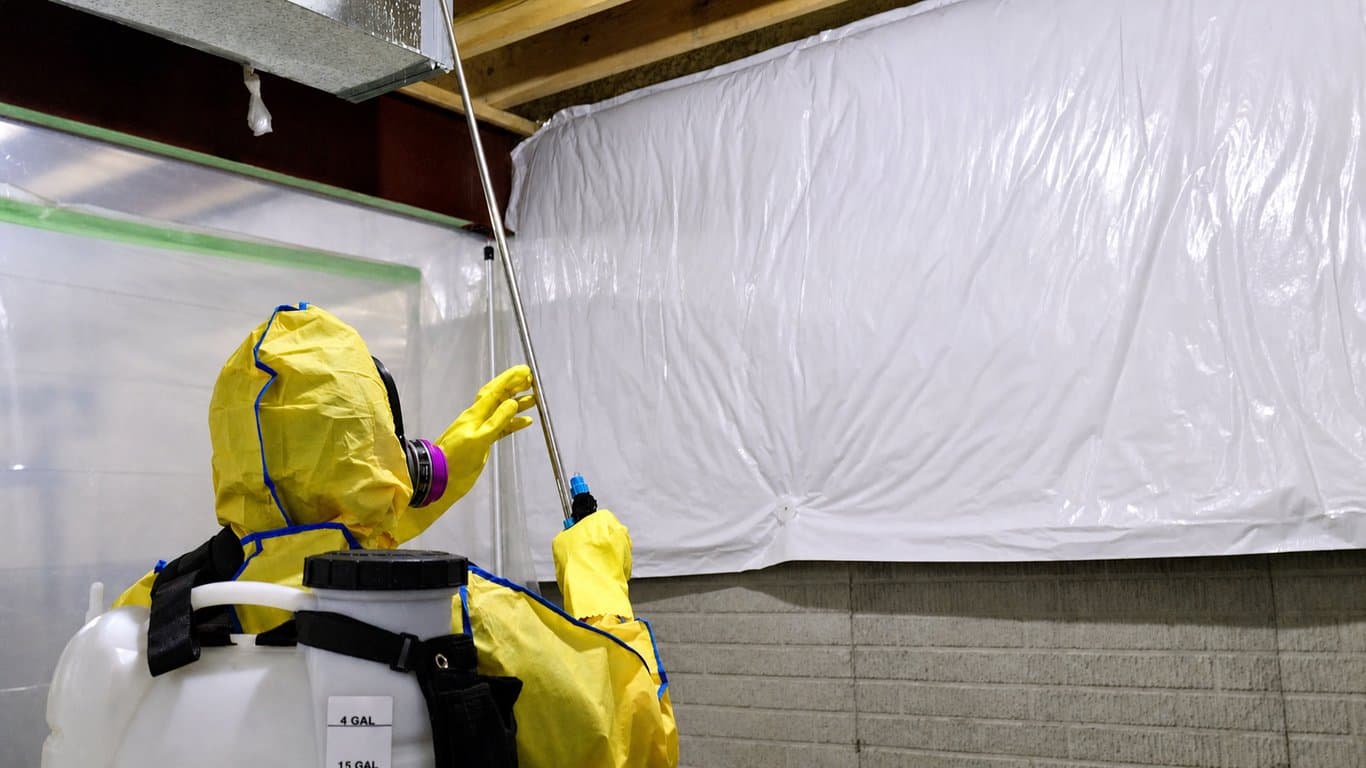
Floors and belongings are protected while the affected area is isolated with containment and negative pressure.
We seal off the affected area, remove the mold, and then test the air to prove the work passed. If a treated area does not come back clear, we fix it at no additional cost.
Mold can be visible, airborne, or concealed near a moisture problem. A complete plan needs to define the affected areas, protect the rest of the property, and control what becomes airborne during the work.
Our process combines inspection, containment, negative pressure, HEPA filtration, cleaning, selective material removal when required, and a post-remediation evaluation.
A documented mold remediation process with containment, HEPA filtration, careful material removal when needed, and post-remediation evaluation. The exact scope depends on the inspection findings, but these are the core parts of a qualifying remediation project.
Floors and belongings are protected while the affected area is isolated with containment and negative pressure.
HEPA filtration and surface cleaning address airborne particles, with affected material removed when the approved scope requires it.
Inspection and testing check whether the covered treated area came back clear.
If a treated area does not test clear after remediation, we return and fix it at no additional cost.
Read the written guaranteeThe order matters. Testing defines the work, containment protects the property, and evaluation checks the completed result.
Start by reviewing the building, the occupants, and the visible extent of the concern.
When approved, room-by-room air analysis helps define the remediation plan.
Floors and belongings are covered before the treatment work begins.
The work area is isolated with polyethylene sheeting and HEPA-filtered negative air equipment.
HEPA filtration captures airborne particles while remediation is underway.
Contaminated building materials are removed only where the approved scope calls for it.
Affected walls, ceilings, floors, and other surfaces are vacuumed and wiped with an appropriate disinfectant.
Professional chemistry helps bring remaining contaminants to the surface for removal.
The resulting treatment material is removed with wet vacuum extraction.
Inspection and testing check whether the remediation was successful.
Courtney and Sara each started with mold testing and continued through remediation with our team. Hear what stood out after the work was done.
Straight answers about the service, the process, and what to expect next.
In one Cleveland basement example, a 300-square-foot affected area cost $3,600 to $4,800. Final pricing depends on the affected area's size and location, the materials involved, containment needs, HVAC involvement, demolition, cleaning methods, and post-remediation evaluation. Read the full Cleveland mold remediation pricing guide.
A free visual consult is the first step. We will explain what we see, whether testing makes sense, and what a covered remediation scope would include. A person answers 24/7.