Bath and kitchen fans venting into the attic
A fan that terminates under the roof instead of through it puts warm, humid air directly onto cold sheathing every time it runs. It is the single most common cause we find.
Roof leaks, indoor air leaks, and ventilation problems can keep attic materials damp. We investigate the moisture source, assess the wood, and define the cleanup.

Roof sheathing
Where attic growth almost always appears
North slope
The coldest surface, and usually the worst
Winter moisture
Indoor humidity condensing on cold decking
Ventilation fix
Included in the scope, not sold separately
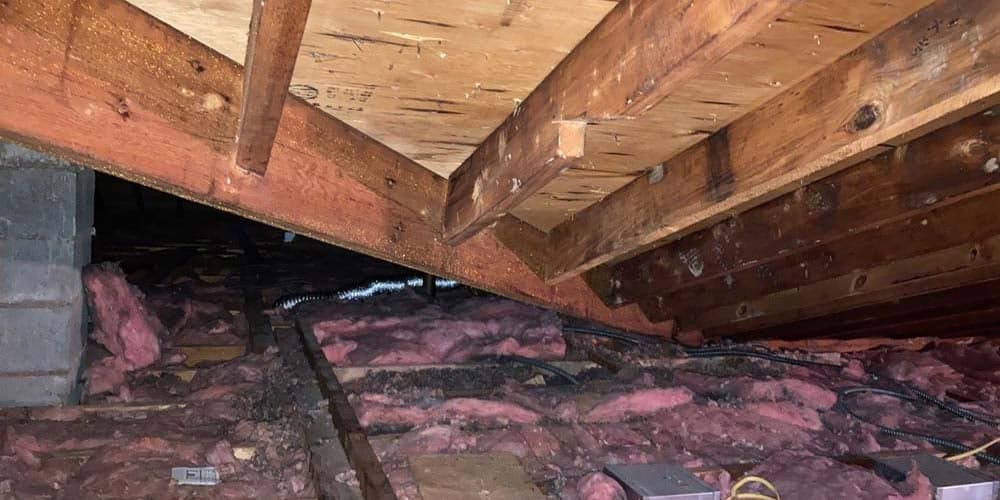
Homeowners expect attic mold to mean a roof leak, and far more often the roof is fine. Warm, humid air from the living space rises into the attic through bath fan ducts, the attic hatch, recessed lights, and plumbing penetrations, then condenses on roof decking that is barely above outdoor temperature — which is why the growth spreads as dark staining across the sheathing, worst on the cold north slope, rather than sitting in one patch under a leak.
It also explains why ventilation matters more than cleaning: if the attic cannot draw air in at the soffits and exhaust it at the ridge, that moisture has nowhere to go.
Insulation pushed out over the eaves during an upgrade is one of the most common causes we find, because it blocks the intake vents completely.
Each one is a moisture path from the conditioned space into the attic. Finding which one applies decides the scope.
A fan that terminates under the roof instead of through it puts warm, humid air directly onto cold sheathing every time it runs. It is the single most common cause we find.
Insulation packed over the eaves stops the attic from drawing in outside air. Without intake, ridge and roof vents cannot exhaust anything, and the moisture stays.
An unsealed attic hatch, recessed lights, and plumbing or wiring penetrations let heated indoor air rise into the attic continuously through the winter.
Structurally sound sheathing can often be cleaned and treated in place. Deteriorated or unsalvageable wood may need replacement, with roofing or structural repairs handled by the appropriate trade.
We look at the attic, the roofline, the soffits, and where your exhaust fans actually terminate. Often the cause is visible in the first few minutes.
Room-by-room airborne readings help investigate conditions in the living space. We interpret those measurements alongside moisture and visual findings rather than assuming they identify the source on their own.
The attic access is sealed and put under air control so the work does not push spores down into the house.
Sound, salvageable wood is HEPA vacuumed, cleaned, and treated. If decking is damaged or cannot be restored, the scope should address replacement with the appropriate roofing or structural professional.
Blocked soffits are opened, fans are redirected to terminate outside, and penetrations through the ceiling plane are sealed. Without this step the growth returns.
We complete a post-remediation evaluation and give you the readings for your records, covered by our remediation guarantee.
Attics are one of the three places this comes up most, because growth there is usually well established before anyone climbs up to see it.
Straight answers about the service, the process, and what to expect next.
It can be. Attic moisture can also come from indoor air leaks, blocked ventilation, or exhaust fans that terminate inside the attic. The pattern of staining is a useful clue, but the inspection should check both roof leaks and condensation before defining the repair.
Structurally sound sheathing can often be cleaned and treated in place. Wood that is deteriorated, delaminated, or otherwise unsalvageable may need replacement. We assess its condition and coordinate structural or roofing work with the appropriate trade when needed.
It may return if the moisture source remains. The written scope should explain the needed ventilation, exhaust, air-sealing, or leak repairs and who is responsible for them alongside the mold work.
Air can move between the attic and living areas depending on the building and HVAC system. Room-by-room airborne readings can help investigate conditions, but a reading alone cannot establish the source. We evaluate it alongside the visual and moisture findings.
Send a photo or tell us what you found up there. The free visual consult usually identifies the moisture path before any testing is needed. A person answers 24/7.