
Video transcriptWhat Makes Our Mold Testing Different?
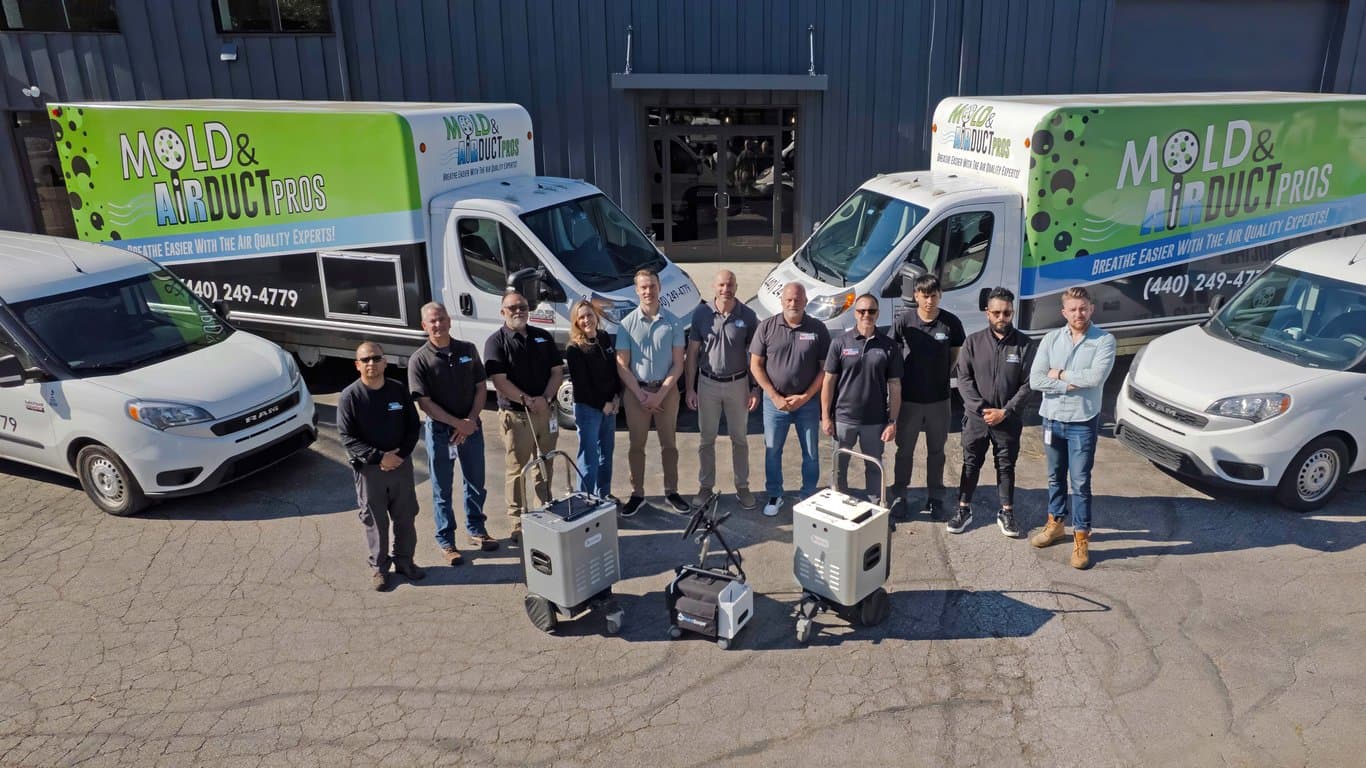
What makes Mold and Air Duct Pros testing so special? Hi, this is Zakhar Keselman from Mold and Air Duct Pros, based in Cleveland, Ohio. At Mold and Air Duct Pros, we believe in finding the right answer in the least amount of time and with the least amount of money. That is what we call value. In fact, that is what separates us from other companies in the area. We use the latest technology available to capture accurate measurements for airborne mold and bacteria in real time.
With traditional mold inspections, it can take days for lab results to come back. Mold and Air Duct Pros can generate reports on site. With our technology, we can scan an entire house in a short amount of time, which means you get a report for every room. This helps make sure we do not miss problem areas. This technology leads to savings for everyone. Multiple site visits and follow-ups to review results can become costly and time-consuming for both the customer and the technician.
Mold and Air Duct Pros simplifies the inspection process and eliminates those logistical complications with on-the-spot reporting. If you need to schedule mold inspection and testing, please contact Mold and Air Duct Pros at (440) 467-4104 today.
Finding mold while you are getting a house ready to sell is stressful. It can feel like one more thing standing between you and the closing table. Take a breath. Mold does not automatically make a home unsellable.
What creates trouble is uncertainty. A buyer sees a stain, notices a musty odor, or receives a vague inspection note, and everybody starts imagining the most expensive possibility. A clear assessment, a corrected moisture source, an appropriate cleanup plan, and organized records give the conversation somewhere useful to go.
A home with mold can still be sold in Ohio. Whether you address it before listing or disclose it and negotiate with a buyer depends on the extent, timing, contract, and financing. The safest practical approach is to be honest about what you know, fix the moisture source, and document what was inspected and completed.
What Should You Do If You Find Mold Before Listing?
1. Stop the Water or Moisture First
Mold is a moisture problem before it is a cleaning problem. Repair the roof or plumbing leak, correct drainage, control basement humidity, or address the ventilation problem that allowed the material to stay damp.
Cleaning without fixing the source is how a small concern becomes the same concern again three weeks before closing.
2. Do Not Cover It Up
Fresh paint may make a wall look better for a showing, but it does not fix mold or water damage underneath. The EPA specifically advises against painting or caulking over moldy surfaces. Clean or remove the affected material, dry the area, and then complete cosmetic repairs.
Bleach is not a universal answer either. It can be useful on some hard surfaces, but it does not replace physical cleaning, moisture control, or removal of damaged porous material. Our guide to using bleach on mold explains where it may and may not fit.
3. Save the History
Write down when the problem was found, where the water came from, and what was done. Keep photographs, leak-repair invoices, inspection reports, remediation scopes, paid receipts, and post-remediation results together.
This is not about creating a giant binder to frighten people. It is about being able to answer reasonable questions without guessing.
4. Decide Whether the Scope Is Truly Small
The EPA says an area smaller than about 10 square feet can often be handled by a homeowner. That is a general cleanup guideline, not an automatic green light. Hidden growth, repeated water intrusion, contaminated water, damaged drywall or insulation, HVAC involvement, and health concerns can all make professional help the better choice.
5. Bring Your Real Estate Professional Into the Conversation
Tell your agent what you know before the listing goes live. They can help you think through timing, pricing, buyer expectations, and the language in your forms and contract. For legal advice about your specific disclosure duties, speak with an Ohio real estate attorney.

Do You Need a Mold Inspection Before Selling?
Not every visible patch needs laboratory sampling. The EPA says sampling is usually unnecessary when visible mold growth is already present. You still need to understand the moisture source, affected material, and extent of the problem.
An inspection or testing can be especially useful when:
- There is a musty odor but no obvious source.
- The property has a history of leaks, flooding, or damp basement conditions.
- A concern may extend beyond the one area you can see.
- A home inspector, buyer, appraiser, or lender requests more information.
- You need a written baseline before remediation.
- You want a post-remediation evaluation after the work.
These terms are often used as if they mean the same thing, but they do different jobs:
- Mold inspection looks at the building, moisture history, visible conditions, and areas that deserve closer attention.
- Mold testing measures a sample or airborne condition. The method should match the question being asked.
- Mold remediation controls the work area, removes or cleans affected materials, and addresses the contamination according to a defined scope.
- Post-remediation evaluation checks the completed work against the agreed visual and testing criteria.
There is no federal pass-or-fail number for airborne mold. The EPA says it has not established standards or threshold limit values for airborne mold concentrations. That is why a useful report should explain the method, locations, comparison points, building conditions, and what the results support. A single number without context is not much of an answer.
What Does Ohio Require a Home Seller to Disclose?
Ohio Revised Code Section 5302.30 generally requires sellers in covered one-to-four-unit residential transfers to complete and deliver a property disclosure form. The law has exceptions, so your agent or attorney should confirm what applies to your sale.
The current Ohio Residential Property Disclosure Form asks owners about:
- Previous or current water leakage, accumulation, and excess moisture.
- Water or moisture damage involving floors, walls, or ceilings.
- Whether the property has ever been inspected for mold by a qualified inspector.
- Whether an inspection report exists and whether remediation was performed.
The form is based on the owner's actual knowledge, and Ohio law requires those disclosures to be made in good faith. It is not a warranty and does not replace the buyer's own inspections.
This section is general information, not legal advice. Mold conditions, prior repairs, contracts, and disclosure obligations can differ from one transaction to another.
Should You Remediate Before Listing or Sell As-Is?
There is no single right answer for every house.
Remediating Before the Listing
This can make sense when the concern is defined, the moisture source can be repaired, and there is enough time to complete the work properly. The seller controls the contractor, scope, schedule, and records. Buyers can evaluate completed work instead of estimating an unknown future cost.
The tradeoff is that the seller pays before knowing exactly how the market would have responded. Opening an affected area can also reveal a larger scope, which is useful information but may change the budget or timeline.
Disclosing the Condition and Selling As-Is
This may fit a seller with limited time or cash, an estate, an investor transaction, or a buyer already planning a major renovation. The price and contract can account for the known condition.
The tradeoff is a smaller buyer pool and more uncertainty. Buyers may request their own inspection, negotiate a repair or credit, or decide the project is not right for them. An as-is term also should not be treated as permission to hide a known condition. Ask your agent or attorney how disclosure and as-is language work together in your contract.
Can Mold Affect an Appraisal or Mortgage?
It can, but there is no universal rule that every mold finding kills financing.
An appraiser is not performing a mold inspection. However, visible adverse conditions may be noted, and a lender may request a qualified inspection, repairs, or documentation before approving the property. Fannie Mae's environmental-hazard guidance leaves the final decision about needed inspections and the property's adequacy to the lender.
That is one reason to ask about the buyer's loan early. A repair credit may satisfy the people in the contract but not the lender funding it. If financing is involved, the buyer, loan officer, appraiser, agents, and contractors may all need the same written information.
What Mold Documentation Helps a Home Sale?
A useful property file may include:
- The inspection report and areas evaluated.
- Photographs and moisture readings.
- The testing method and results, when testing was appropriate.
- An invoice showing the moisture source was repaired.
- The written remediation scope.
- Completion photos and paid invoices.
- Post-remediation evaluation results.
- Any written warranty or service guarantee.
Be cautious with promises that a house is completely “mold-free.” Mold spores naturally exist indoors and outdoors, and the EPA has no federal airborne mold limit. Better documentation says what was inspected, what was found, what work was completed, and how the finished area was evaluated.
Some buyers, contracts, or lenders may request a post-remediation evaluation from someone who did not perform the cleanup. Ask about that before work begins so everybody agrees on the documentation needed for closing.

What If Mold Is Discovered After You Accept an Offer?
Do not panic, and do not start tearing into walls before the transaction team has a plan.
- Tell your real estate professional promptly.
- Review the inspection, disclosure, and repair deadlines in the contract.
- Stop any active water source.
- Get a written assessment or scope instead of negotiating from a vague inspection note.
- Agree in writing on who will complete the work, who will evaluate it, and what records the buyer and lender need.
- Ask your agent or attorney whether the property disclosure should be amended. Ohio law allows written amendments after the original form is delivered.
Depending on the contract, the parties may discuss seller-completed work, a price adjustment, a credit, or another solution. Your mold contractor can explain the building work, but your agent, lender, and attorney should guide the transaction terms.
For a closer look at inspection timing and repair negotiations from both sides of a deal, see our guide to mold in Cleveland home transactions.
How We Help Cleveland-Area Sellers and Realtors
We start with the building and the question you actually need answered. That may be a visual review of one known area, or it may be a whole-home inspection when the source or extent is uncertain.
When airborne testing is useful, our inspectors use InstaScope to take room-by-room bioaerosol readings and review the results during the appointment. The technology uses optical particle recognition and biofluorescence to classify airborne biological particles. It does not identify individual mold species. If a project needs species identification, targeted laboratory sampling is a different tool.
Our process can include:
- A free visual consult to understand the concern.
- Moisture readings, thermal imaging, and visual inspection.
- On-site airborne testing and a same-day report when appropriate.
- A written remediation scope if corrective work is needed.
- Containment, removal, detailed cleaning, and moisture-source coordination.
- A post-remediation evaluation and records for the property file.
One seller we worked with was managing an Ohio property from across the country. Inspection findings led her to pause the listing, and our team returned for additional testing before she put it back on the market. She later told us the detailed report helped her relist with confidence. That is the real value during a home sale: replacing a scary unknown with documented facts and a practical next step.
FAQs
Can You Sell a House with Mold in Ohio?
Yes. Mold does not automatically prohibit a home sale in Ohio. Sellers still need to address applicable disclosure duties, and a buyer, contract, appraiser, or lender may require more information or corrective work.
Does an Ohio Seller Have to Remove Mold Before Closing?
Ohio's property disclosure law focuses on reporting known conditions in good faith. It does not create one blanket rule requiring every mold condition to be remediated before every sale. The purchase contract, buyer, lender, insurer, local requirements, and specific property conditions may affect what must happen before closing.
Should I Test for Mold Before Listing My House?
Testing is not automatically needed when visible growth already defines the cleanup area. It can be useful when the source or extent is unclear, conditions may involve multiple rooms, a buyer or lender wants documentation, or you need a baseline and post-remediation comparison.
Does Mold Automatically Fail a Home Appraisal?
No. An appraiser may note visible adverse conditions, and the lender decides whether an inspection, repair, or additional documentation is required. The answer depends on the condition, loan program, appraisal, and lender.
What Should I Give a Buyer After Mold Remediation?
Provide the records that explain the full story: the moisture-source repair, inspection findings, remediation scope, completion invoice, photographs, post-remediation evaluation, and any applicable warranty or guarantee.
Is a Mold Clearance Certificate the Same as a Mold-Free Guarantee?
No. There is no federal airborne mold standard and no meaningful way to promise that a normal home contains zero mold spores. A responsible post-remediation document should identify the evaluated area, methods, results, comparison criteria, and conditions at the time of the evaluation.