Water damage restoration in ClevelandWater damage?
Start here.
Our sister company, Cleveland Water and Fire Restoration, handles water removal and drying. We handle mold testing and remediation. One call helps you find the right next step.
Call (440) 467-4104Concerned about mold? Request a free visual consult

Water
removalExtraction and drying through our sister team.
Moisture
checksLooking beneath floors and behind the surface.
Mold
careTesting and removal by our mold specialists.
Rebuild
supportRepairs through Keselman Construction Group.
Our family of companies helps with drying, mold removal, and repairs.
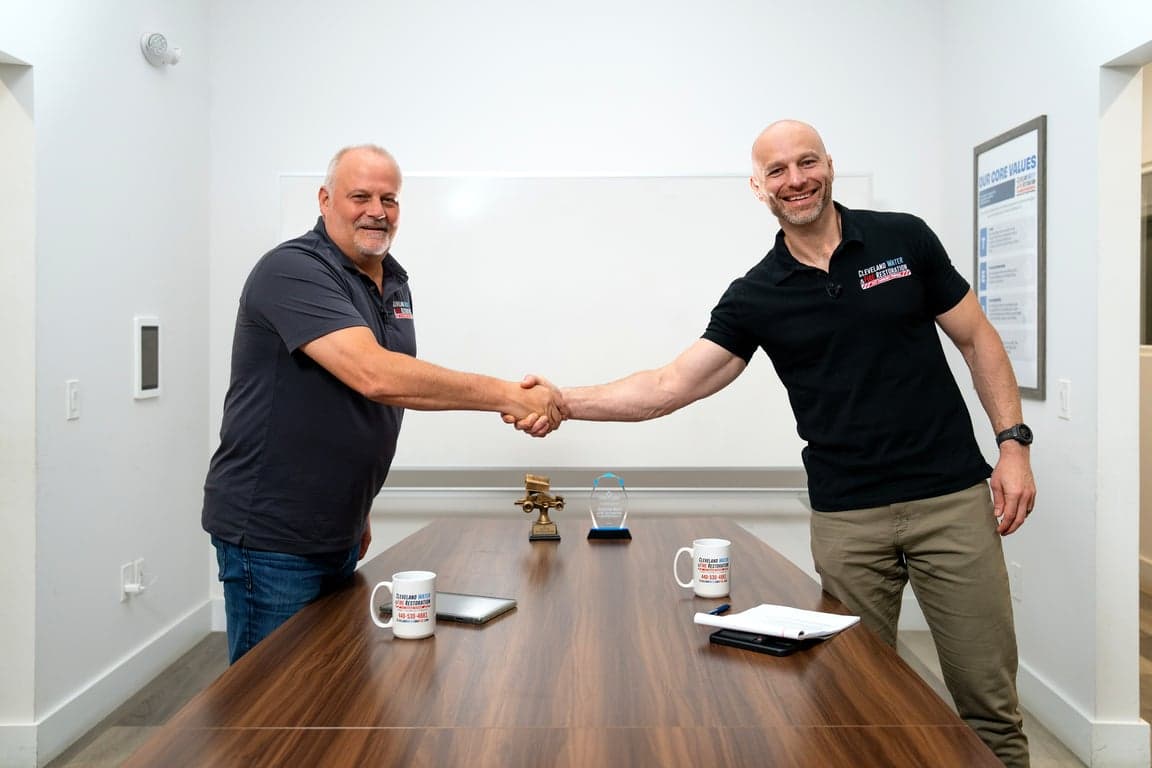
Water damage can involve more than one kind of work. Our family of companies covers drying, mold care, and rebuilding, with a clear role for each team.
Tell us what happened and what has already been done. We’ll help you understand who to speak with next.
Remove water. Dry the structure.
Our sister company extracts water, sets drying equipment, and monitors moisture until the structure reads dry.
Check for mold. Treat what’s needed.
We handle mold testing and remediation when a mold problem is found. On-site testing gives you readings during the visit.
Put the affected rooms back together.
When damaged materials need to be rebuilt, our sister construction company handles the repairs.

Water still active? Start with a call.
Tell us what’s happening. We’ll point you to Cleveland Water and Fire Restoration for the water response, or help with mold concerns once the water is handled.
A homeowner’s experience in Shaker Heights
How we helped Courtney after a leak revealed mold.
After a leak revealed mold behind her walls, Courtney needed to understand the extent of the problem. She shares how testing, contained removal, and a check of the results helped her move forward.
Read Courtney’s Shaker Heights story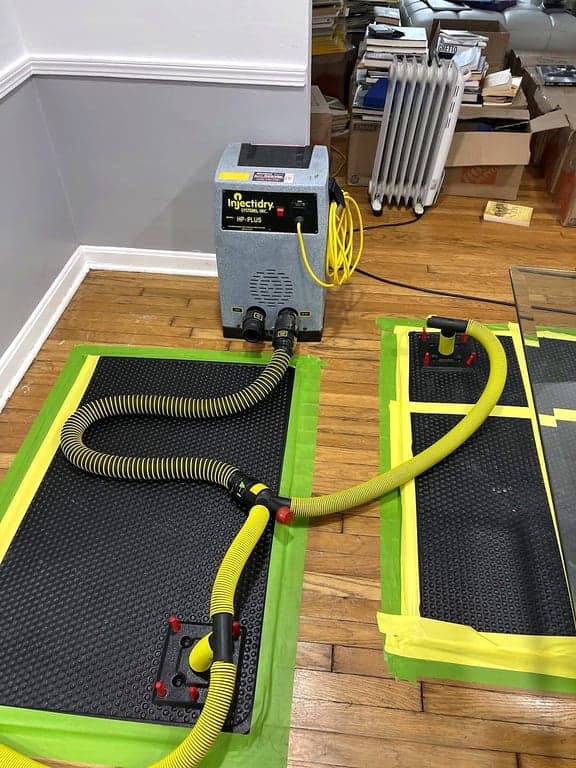
The puddle is only part of the picture.
Water can travel under flooring and into drywall, insulation, and framing. A surface may look dry while moisture remains behind it.
Finding those areas and monitoring them during drying helps keep the focus on the affected materials. If mold is a concern, our team can explain whether inspection and testing make sense.
See how our mold inspection worksHow water damage can lead to mold.
Mold can develop on wet materials quickly. As the questions below explain, drying within 24 to 48 hours is an important prevention goal.
Room humidity alone does not tell you whether a wall or floor is dry. Hidden moisture should be checked during the water-damage response.
A short explanation from Zakhar about moisture and mold growth after water damage.
A few things you may be wondering.
Have a different question? We’re happy to talk it through.
(440) 467-4104Do you do the water extraction and drying yourselves?
No. Our sister company Cleveland Water and Fire Restoration handles that side: extraction, drying equipment, and monitoring moisture until the structure reads dry. We handle the mold testing and remediation, and Keselman Construction Group closes the walls when a rebuild is needed.
How quickly can mold start after water damage?
Mold can develop on wet materials quickly, so drying within 24 to 48 hours is an important prevention goal. Room humidity below 60% does not rule out wet material inside a wall or under flooring. Hidden moisture should be checked during the water-damage response.
Who should I call first?
Call us and describe what happened. If the water is still active, we will point you to Cleveland Water and Fire Restoration first. If the water is already handled, we can start with the mold side. Either way you make one call and land with the right team.
You don’t have to figure it out alone.
Tell us where the water came from and what you’ve noticed. We’ll help you understand the next step, whether that’s water restoration or a look at a mold concern.

Let’s take a look.
Request a free visual consult or call us now. A person answers 24/7.
Request my free visual consultor call us
(440) 467-4104No cost or obligation for the visual consult.