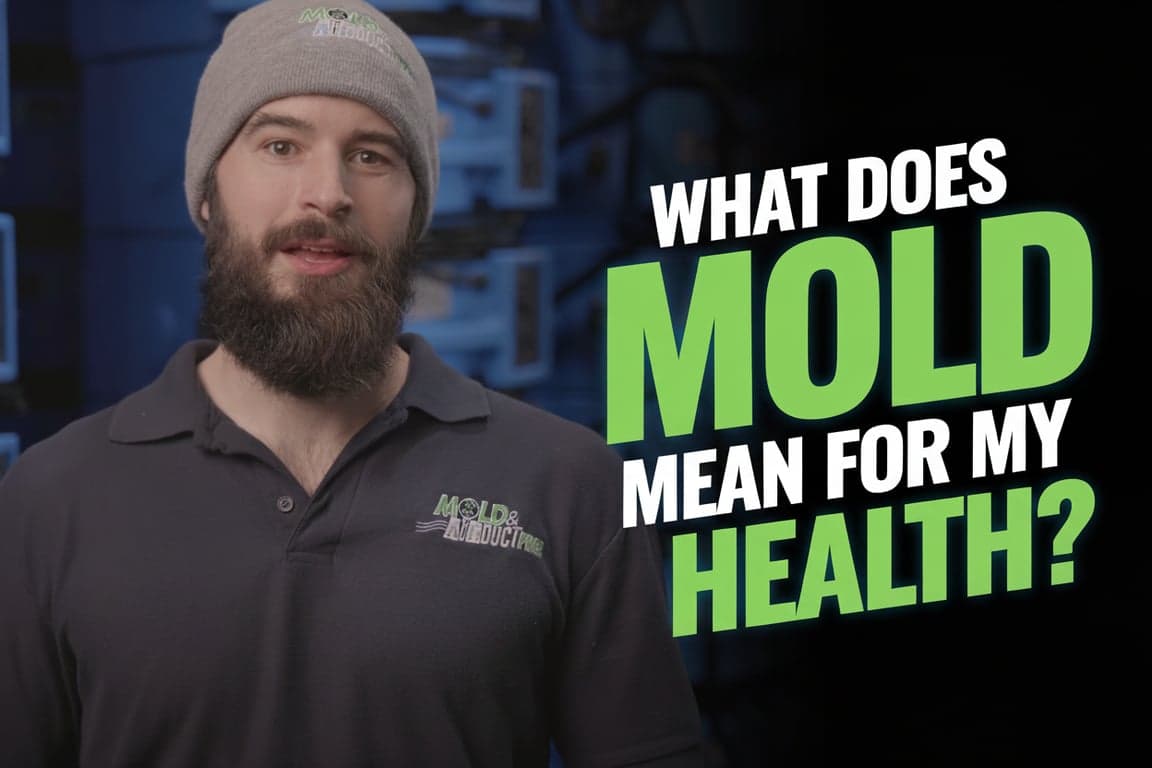

Video transcriptWhat Does Mold Mean for Me and My Health?
What does mold mean for me and my health? Hi, I'm Josh from Mold and Air Duct Pros, based in Cleveland, Ohio. There are over 100,000 species of mold, and each person's body may react differently to each mold type. The elderly, infants, young children, individuals with immune suppression, or those with underlying lung disease may be more sensitive to mold exposure and may experience more severe symptoms.
The most common mold-related symptoms are nasal stuffiness, throat irritation, coughing or wheezing, eye or skin irritation, headaches, lack of mental clarity, or in more severe cases, fever and difficulty breathing. Allergic reactions may happen immediately or develop after a period following exposure. Both growing mold and even dead mold spores may lead to allergic reactions. That's why we HEPA vacuum each square inch of the contaminated area after the treatment, to remove the dead mold spores.
Mold has been known to cause asthma attacks in people who have asthma and are allergic to mold. Regardless of your health condition, it's best to stay on top of any mold issues in your home or office and take proper steps to protect yourself. If you have any concerns about potential mold in your home or office, give Mold and Air Duct Pros a call at (440) 467-4104.
Mold facts are most useful when they help you decide what to do about a damp room, a musty smell, or visible growth. For Cleveland homeowners, the starting point is simple: investigate the moisture and the affected materials before choosing a cleaner or paying for testing.
These five facts explain what mold can tell you about your home, what it cannot tell you about your health, and when to get help.
1. Mold Spores Are Normal; Indoor Growth Needs Attention
Mold is a fungus. Its spores occur naturally indoors and outdoors, so finding a few spores is not the same as finding a building problem. Growth on wet drywall, framing, or belongings is a different concern and deserves attention.
A room does not have to exceed an outdoor air reading before visible mold should be addressed. The inspection should consider the materials, moisture history, location, and extent together. Our guide to what mold is explains the basics in more detail.

2. Moisture Is the Problem to Solve First
Cleaning a stain without fixing the water source can leave the same conditions in place. Look for plumbing leaks, roof leaks, damp foundation walls, condensation, and bathroom exhaust that does not reach outdoors.
In a Cleveland home, inspect different areas as conditions change through the year: basements after water intrusion, bathrooms with recurring condensation, and attics with moisture concerns. A dehumidifier can help manage humidity, but it does not repair a leaking pipe or foundation.
The EPA's homeowner mold guide recommends drying wet materials promptly, ideally within 24 to 48 hours, and keeping relative humidity below 60%, ideally 30% to 50% when practical. Check humidity with a meter instead of guessing from how the room feels.
3. Color Does Not Identify the Mold or Its Health Risk
Black, white, green, or brown growth cannot be identified reliably by appearance alone. Several molds can look dark. The term “black mold” is often used for Stachybotrys chartarum, but a photograph of a black patch does not establish that species.
The CDC's Stachybotrys guidance says that identifying the type is not necessary before addressing indoor growth. Our black mold guide explains the signs to document and the next steps to consider.

4. People Respond to Mold Differently
Some people develop irritation or allergy-like symptoms around damp or moldy environments; others notice no effects. Symptoms alone cannot prove that a building has mold or that mold caused an illness. Discuss persistent or concerning symptoms with a qualified healthcare professional.
Read our mold and health guide for primary-source guidance and our separate article on staying in a house with mold for occupancy questions. A building inspector evaluates the property, while a clinician evaluates the person.
5. Testing Should Answer a Specific Question
A useful testing plan explains what is being measured and how the result will change the next step. Testing may help investigate uncertain conditions, compare rooms, or document the outcome of a remediation project.
It is not always necessary. The EPA's mold-testing guidance notes that visible growth often makes sampling unnecessary and that there is no federal airborne mold limit. A test result does not certify that every person can safely occupy a building.
Our mold inspection and testing service combines a visual review, moisture investigation, and room-by-room airborne readings. See inspection pricing and what is included before deciding whether that service fits your concern.

What Should You Do If You Find Mold?
Document the location, avoid disturbing the material, and address the water source. A small patch on a cleanable surface is different from growth inside a wall or contamination after a sewage backup. Our guide to DIY mold cleanup risks can help you recognize when professional help makes sense.
Do not assume that spraying bleach or covering a stain completes the cleanup. Our guide to using bleach on mold explains why the material and physical removal matter.
For a recurring or unclear concern in Northeast Ohio, request a free visual consult. We can review what you have found and explain whether further inspection or remediation is appropriate.