
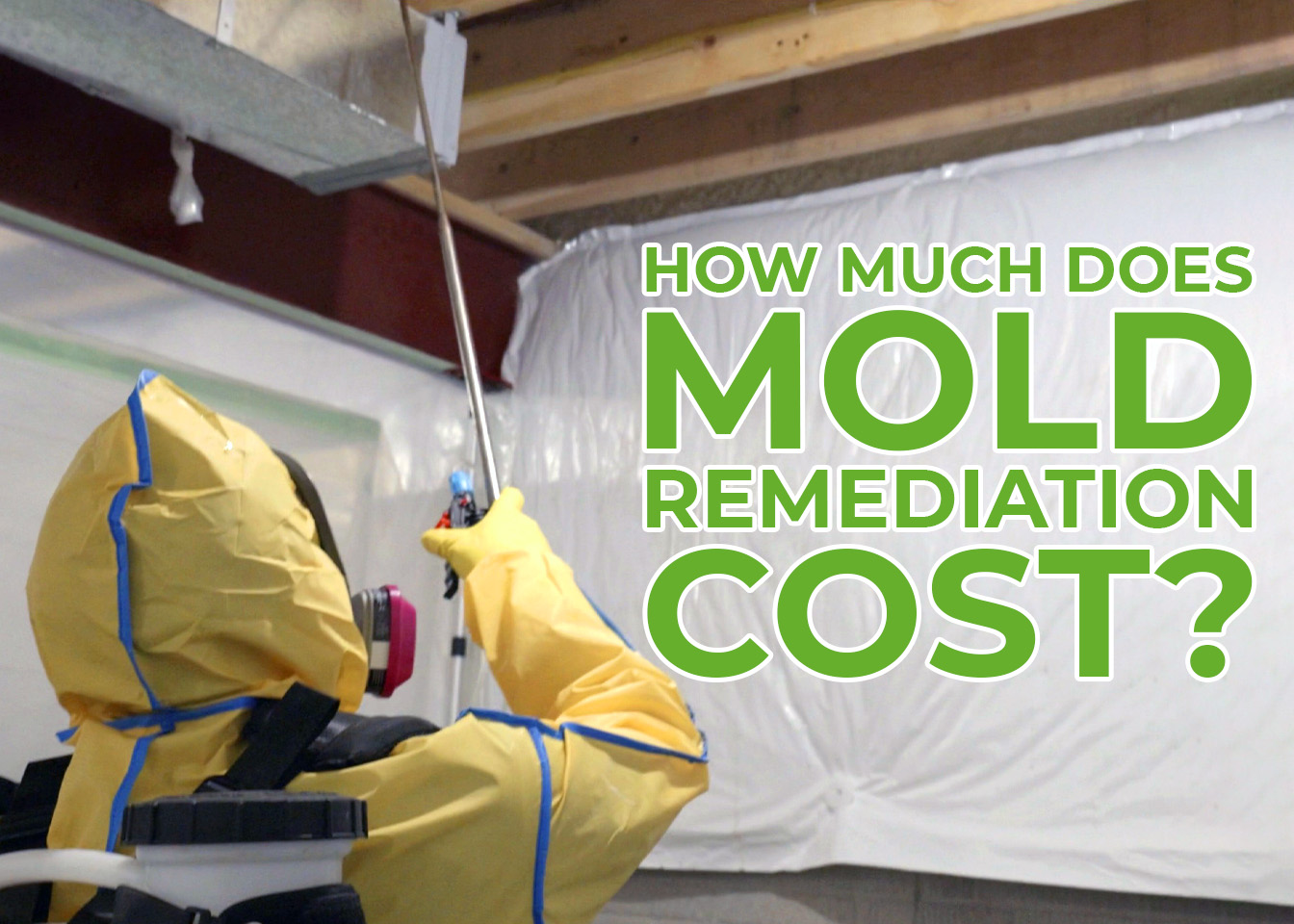
Real pricing from a local mold remediation company—plus what’s actually included in a professional job.
Video Transcript
Zach: Mark, so let’s say you did the mold inspection at the home and you found mold that needs to be remediated. Now the customer is wondering – how much does an average, typical mold remediation job cost?
Mark: It’s a great question. You’re right – you will never get work from us until we do that kind of an inspection because we really want to ensure the health and safety of you and the occupants in the house.
But really, every mold job is going to follow a similar template.
Mark: Number one, we want to have containment.
Zach: What does that mean?
Mark: Containment basically means this – when we’re going to be removing drywall (or whatever it is) and disturbing material, we don’t want that going to areas that are not contaminated.
So, hypothetically, let’s use an example. Let’s say we’re treating an area in your basement – it’s around 300 square feet.
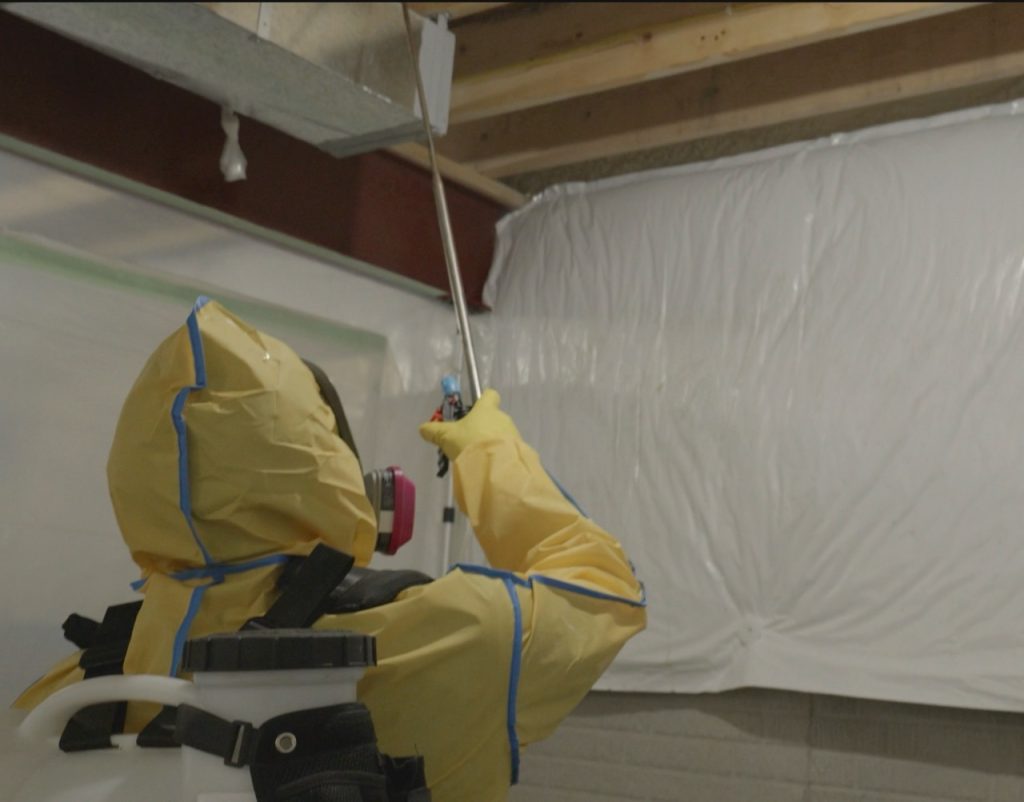
You’re going to be walking in and (don’t laugh at this) it’s going to be kind of like a crime scene. You’ll have a zipper door coming in. You’ll have tension poles up against the ceiling. It’s designed to create a controlled environment where we can confidently remove the mold.
Which leads me to the next part – how do we treat it?
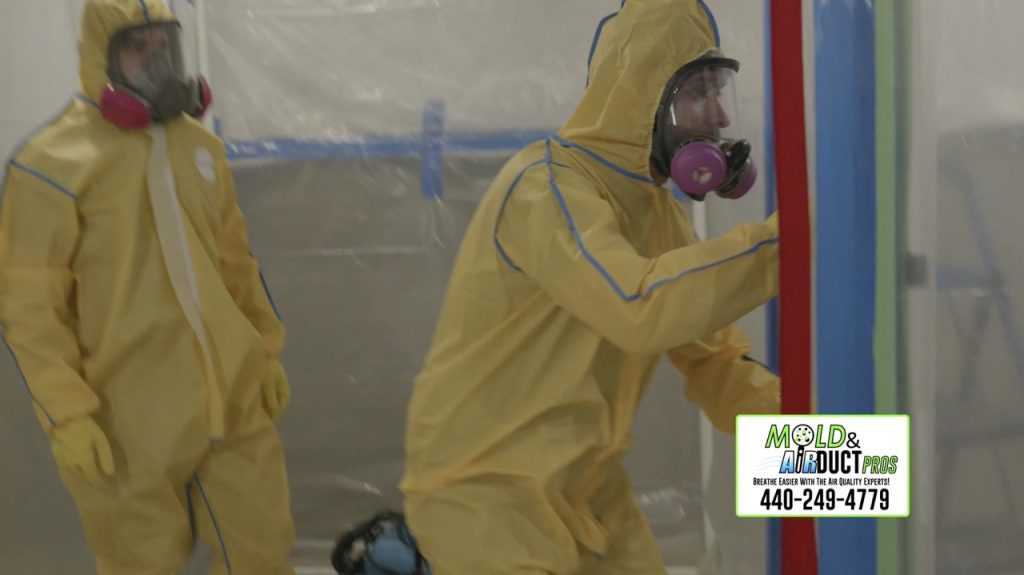
In our business, we use what’s called a mold severity index. This helps us determine what do you do in this corner, what do you do in this quadrant, or what do you do here, here, and here.
For instance, when you see drywall that’s severely impacted – discolored, ugly – you remove it.
Zach: Yeah. You see those big black spots and you know it goes all the way through the drywall.
Mark: Exactly. Because there’s this misconception that you can kill mold. You can’t really “kill” mold. The industry standard says, “Hey, you remove it.”
Zach: So like when companies say just put bleach on it and then kills and paint it –
Mark: Not going to fly.
Zach: No – the air quality is still going to remain the same. The mold spores are still in the air.
Mark: Exactly. And since you mentioned mold spores in the air, there are a couple other things that go into it.
Number one, before we do any work, our guys are going to have PPE. We want to protect you as well as our workers.
But the other two big things – assuming we’ve removed that impacted drywall – a lot of times behind that drywall you might have insulation. Insulation has to be removed, unfortunately, because it’s porous.
Now keep in mind – if we find microbial growth on wood, we have a method called the React Extract. It’s a chemical solution we place on the material and it acts almost like a lifting agent.
So we want to make sure not just the staining is removed, but the actual roots that the mold embeds in that wood.
Now the big one is this – even if we treat things and follow the correct protocol, you’re still going to have things airborne. That’s where we use high-powered negative air pressure machines.
What they’re designed to do is two things. They capture what’s inside the chamber, and they also duct air outside your home – outside your windows. Imagine a big funnel going from a machine and being ducted out a window. Whatever those filters don’t capture, we want to make sure ends up outside.
Once that’s complete, we do HEPA vacuuming. Our guys physically go to every square inch.
Every mold job is also going to include an air duct cleaning.
Zach: Okay.
Mark: It’s very important with a mold job – every mold job, believe it or not. Mold often becomes airborne, and with airflow going to vents, those particles can get picked up and travel throughout the house.
Then the next step is post-remediation verification.
Some people ask, “Mark, why do I have to clean air ducts? It sounds like you’re trying to steal my money.”
By no means are we trying to do that. We want to ensure when we completed our service, we can give you documentation and proof that what we did was done correctly.
Zach: It’s done correctly.
Mark: Yep. The area has been tested, retested, and it’s all clear.
Zach: Exactly.
Mark: And when we’re talking about this – mold is not a regulated industry yet in Ohio. There are companies that will come in, see visual mold staining in a basement, and just spray some “magic chemical.” But what they really did is spread those mold spores throughout the house.
So we contain the area. We make sure whatever is airborne is caught by our air scrubbers. We HEPA vacuum every square inch in that room. And then we do post-remediation verification to ensure it’s done the right way. We don’t pass a job if it’s not done the right way.
Zach: Correct.
Mark: Now, you asked earlier about cost, and I forgot to answer. In terms of cost, it really depends.
Let’s use our example – a 300 square foot basement area. Depending on the severity of each area we’re treating, it can be as little as $3,600 up to $4,800. It really depends on the severity and how much demolition needs to happen.
Zach: Exactly.
Mark: One other thing about demolition – when we do these jobs and there is controlled demolition, we want to ensure nothing spreads. There are containment chambers – areas where guys can come in, take off their PPE, and come out.
And you’re never going to see our guys walking through your house carrying a piece of drywall. We always bag it, goose-neck it, tie it up, and then carry it out.
There’s a lot that goes into it. But the value you get from it is on par – there’s a lot involved.
For customers saying, “I never want to deal with this mold issue again,” we also do preventative steps like a mold coating that comes with a 10-year warranty. As long as surfaces are covered, mold is not going to grow on them. It breathes – it lets moisture through but not in.
And if there’s a high humidity level in the house, we utilize really good dehumidifiers.
Zach: Correct.
Mark: At the end of the day, the health and safety of the occupants is our primary goal. We want to make sure they align with us on all these steps.
It may sound like a lot, but it’s the best way to get an effective project done back to what we call “condition one,” where it’s visibly clean, we can test the air, and say, “These are normal levels.”
And if the homeowner needs help with reconstruction, we can guide them through that too. That’s what it takes.
Zach: So, $13 to $16 per square foot of the affected area.
Mark: Correct. And that includes air duct cleaning, the full mold remediation process, and post-remediation verification.
Zach: Now last question – let’s say during post-remediation verification or evaluation you don’t pass the inspection. Does the customer have to pay extra for more cleanup to happen?
Mark: Absolutely not. No. If we’re investing our time and effort into the best industry practices, the best tools, the best equipment, and protecting our guys, there’s no reason we shouldn’t pass these tests.
And I’ll tell you this – Zach, I’ve been here about 2 years and 6 months. That might not sound like a lot, but I did the math – it was like 1,193 houses, and it’s probably been more since then.
Zach: Wow.
Mark: But listen – in that time, I’ve probably had to redo a house maybe three times. Maybe four times. And there are other inspectors besides me.
Zach: Out of almost 1,200 homes, only three or four where you had to get the guys back?
Mark: Let me rephrase. I’ve been to 1,200 houses – we might not have treated 1,200 houses – but of the houses we did treat, I’ve only had to go back to maybe two or three houses.
We stand by our work. We have the best guys – they love their job, they’re good. I feel confident when I send them in. We’re leaving there with a happy customer. Everybody wins.
Zach: Thank you.
Mark: You got it.
If you’ve found mold in your home, your first question is probably: “How much is this going to cost me?”
It’s a fair question. And honestly, it’s one that most mold companies won’t answer directly. You’ll see ranges online anywhere from “$500 to $30,000″—which isn’t helpful at all.
So, let’s talk real numbers.
Our Mold Remediation Pricing in Cleveland, OH
For a typical 300 square foot area (like a section of basement), professional mold remediation costs between $3,600 and $4,800.
That works out to roughly $13 to $16 per square foot of affected area. That price includes everything: the containment, the removal, the air scrubbing, the HEPA vacuuming, the air duct cleaning, and the post-remediation testing to verify the job was done correctly. No surprise add-ons.
The range depends on severity—specifically, how much demolition is required and how deeply the mold has penetrated materials.
Why Mold Remediation Costs What It Does
When someone asks why mold remediation isn’t cheaper, the honest answer is: because doing it right requires a lot of steps, equipment, and expertise.
Here’s what actually goes into a professional mold remediation job:
Containment Setup
Before anyone touches the mold, we create a controlled environment. This means setting up what looks like a crime scene—zipper doors, tension poles against the ceiling, plastic sheeting to isolate the work area.
Why? Because when you disturb mold (removing drywall, for example), spores become airborne. Without proper containment, you’d just spread contamination throughout the house.
Assessment Using Mold Severity Index
Not all mold damage is treated the same way. During a mold inspection, we use what’s called a mold severity index to determine the right approach for each section of the affected area.
Some areas might need surface treatment. Others—like drywall that’s severely discolored with visible growth going all the way through—need to be removed entirely.
You Can’t Just Kill Mold, You Also Have to Remove It
Here’s something many homeowners don’t realize: you can’t just spray something on mold and call it done.
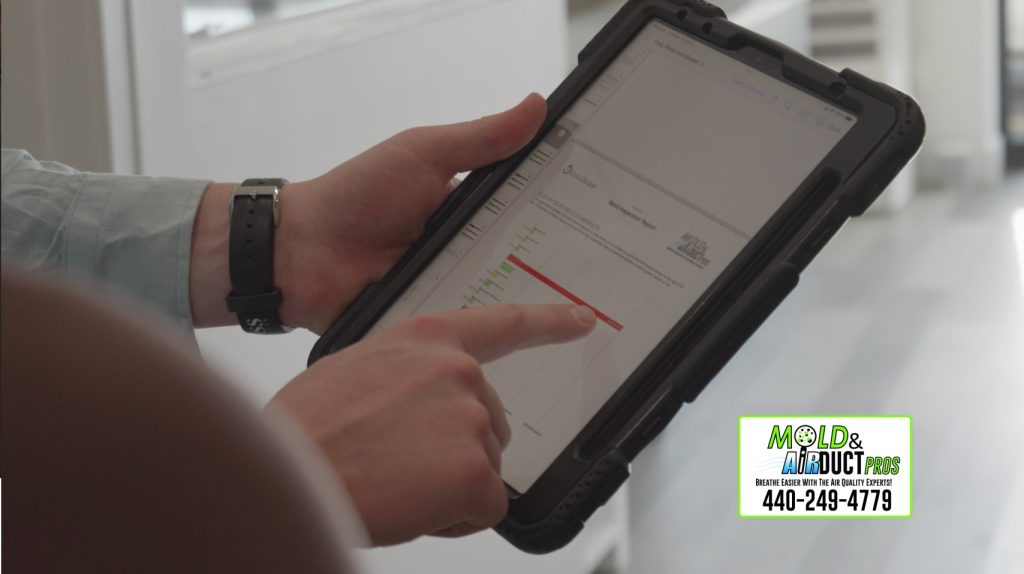
There’s a misconception that you can kill mold with bleach or some chemical, paint over it, and move on. That’s not how it works. The industry standard says you remove mold—you don’t just treat it in place.
Those spores are still in the air. The air quality remains the same. The mold roots are still embedded in the material. Anyone who tells you they can just “spray and seal” visible mold is cutting corners.

Material Removal
Severely impacted drywall gets removed. Same with porous materials like insulation behind the walls—once mold gets into fiberglass insulation, it has to go.
For mold on wood (like studs or joists), we use a process called React Extract. It’s a chemical solution that acts as a lifting agent, removing not just the visible staining but the actual roots the mold embeds into the wood.
Air Scrubbing and Negative Pressure
Even with careful removal, mold spores become airborne during remediation. That’s where negative air pressure machines come in.
These do two things: capture particles inside the containment area through HEPA filters, and duct remaining spores outside through a window. Whatever the filters don’t catch gets pushed outside rather than into your living spaces.
HEPA Vacuuming
After treatment, our technicians physically HEPA vacuum every square inch of the affected area. This isn’t a quick pass—it’s methodical, detailed work.
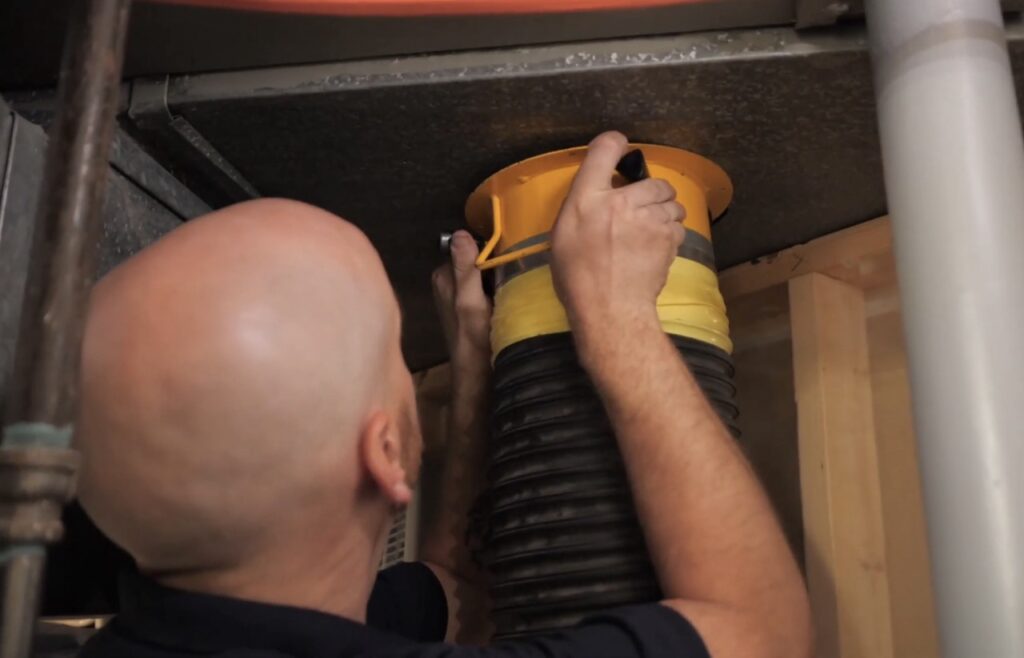
Air Duct Cleaning
Every mold remediation job we do includes air duct cleaning. Every single one.
Some customers ask about this—”Isn’t that just an upsell?” It’s not. Here’s why: mold spores become airborne and travel through your home. With the amount of air flowing through HVAC vents, those spores get picked up and distributed throughout the house.
Cleaning the ducts is part of actually solving the problem, not just treating the visible area. And it’s included in our pricing—not an add-on.
Post-Remediation Verification
After all the work is complete, we test. This is called post-remediation verification.
We don’t consider a job done until we can provide documentation proving the air quality meets acceptable levels. We’re testing to confirm we achieved “condition one”—visibly clean surfaces and normal air quality readings.
This matters because mold remediation in Ohio is unregulated. There’s no license requirement, no oversight. Some companies will come in, see visible mold, spray some chemical, and leave. What they’ve actually done is spread spores throughout the house while collecting a check.
Post-remediation testing is how you know the work was actually effective.
What Happens If Testing Fails?
Fair question. If post-remediation verification shows we didn’t hit acceptable levels, we do additional work at no extra charge to you. That’s part of our 100% mold remediation guarantee.
It rarely happens. In over 1,200 home inspections, we’ve had to go back maybe three or four times. When you invest in proper protocols, equipment, and training, you pass the tests.
But the guarantee matters—you’re not paying twice if something was missed.
What About Preventing Future Mold?
Once remediation is complete, prevention becomes the focus. Two things help:
Mold-resistant coating: We apply a protective coating to treated surfaces that carries a 10-year warranty. As long as the coating remains intact, mold won’t grow on those surfaces. It breathes—lets moisture out but not in.
Humidity control: High humidity is how mold problems start. Professional-grade dehumidifiers keep moisture levels in check, especially in basements and crawl spaces where mold most commonly develops.
If mold has left behind musty smells even after removal, odor removal services can address lingering scents that standard remediation doesn’t fully eliminate.
Questions to Ask Any Mold Remediation Company
If you’re getting quotes from multiple companies, here’s what to ask:
Does your price include post-remediation testing? If not, how will you prove the job was effective?
Is air duct cleaning included? If it’s listed separately, find out why—and what the total cost actually becomes.
What happens if air quality tests don’t pass? Get it in writing.
Are you actually removing mold, or treating in place? Be wary of anyone who talks about “killing” mold and sealing over it.
What containment procedures do you use? If they can’t describe proper isolation protocols, walk away.
The Bottom Line on Cost
Mold remediation isn’t cheap. A 300 square foot area runs $3,600 to $4,800 when done properly.
But “properly” is the key word. You’re paying for containment that prevents spreading spores through your house. For actual removal rather than cosmetic treatment. For verification testing that proves the job worked. For air duct cleaning that addresses the whole-home air quality issue.
Cheaper quotes exist. They almost always skip steps. And those skipped steps mean you’ll be dealing with the same problem again—or worse, a problem that’s spread throughout your home.
The value isn’t just in the work. It’s in knowing it’s actually done.
FAQs
How much does mold remediation cost in Cleveland?
Most mold remediation jobs vary based on the size of the affected area and how severe the mold growth is. In the example discussed (about a 300 square foot area), pricing ranged from $3,600 to $4,800, depending on severity and how much controlled demolition is needed.
Do I need a mold inspection before you can quote a mold remediation price?
Yes, because the correct scope depends on what’s affected, what materials are involved, and how far contamination may have spread. An inspection lets you create a plan that protects the occupants and ensures the remediation is done safely and correctly.
What does “containment” mean during a mold remediation project?
Containment is the process of sealing off the work area so mold spores and dust do not spread into clean parts of the home. This often includes plastic barriers, a zipper door entry, and a controlled environment for removal and cleanup.
Can mold be removed by spraying bleach on it and painting over it?
Not reliably. Spraying and covering may reduce visible staining, but it often does not address the underlying contamination, and spores can remain in the air. Professional remediation commonly involves removing contaminated materials when needed and cleaning the area thoroughly.
What steps are typically included in a professional mold remediation process?
A proper process usually includes containment, worker PPE, removal of contaminated materials (like drywall and sometimes insulation), air scrubbing with negative air machines, detailed HEPA vacuuming, and a final verification step to confirm the area is clean.
Why is air duct cleaning sometimes included with mold remediation?
Because mold spores can become airborne and may be carried through the HVAC system. Cleaning the ductwork can help reduce leftover contamination circulating after remediation, especially when airflow may have moved spores beyond the original area.
What is post-remediation verification, and why is it important for mold remediation?
Post-remediation verification is testing or evaluation after remediation to confirm the area meets a clean standard. It provides documentation and peace of mind that the mold problem was addressed properly.
Do I have to pay more if post-remediation verification shows the area is not clean yet?
No, you should not have to pay extra for a reputable company to correct their own work. If verification does not pass, the remediation contractor should return to perform additional cleaning or corrections needed to meet the required standard.